



A good kitchen knife can last a lifetime, if you look after it. That sounds like work, but it mostly comes down to a few habits. Get these four right and your knife stays sharp longer and keeps looking good.
Habit 1 of 4
Cutting
Our knives are hardened so they hold a sharp edge. The trade-off: hard steel is less forgiving. Use it the wrong way and the edge can roll over or chip.
- Use the right knife for the job. A chef's knife is not for chopping through bones or frozen food. If a cut takes a lot of force, the knife is probably not made for it.
- Cut on wood or plastic. Glass, stone, marble, steel and plates dull the edge fast and can chip it. We like wooden boards, but plastic works well too.
- Don't scrape sideways with the edge. Pushing food across the board with the edge bends it. Flip the knife over and use the spine.

Habit 2 of 4
Cleaning
- Wash by hand, straight after use. None of our knives are dishwasher safe. The dishwasher is hard on both the edge and the handle.
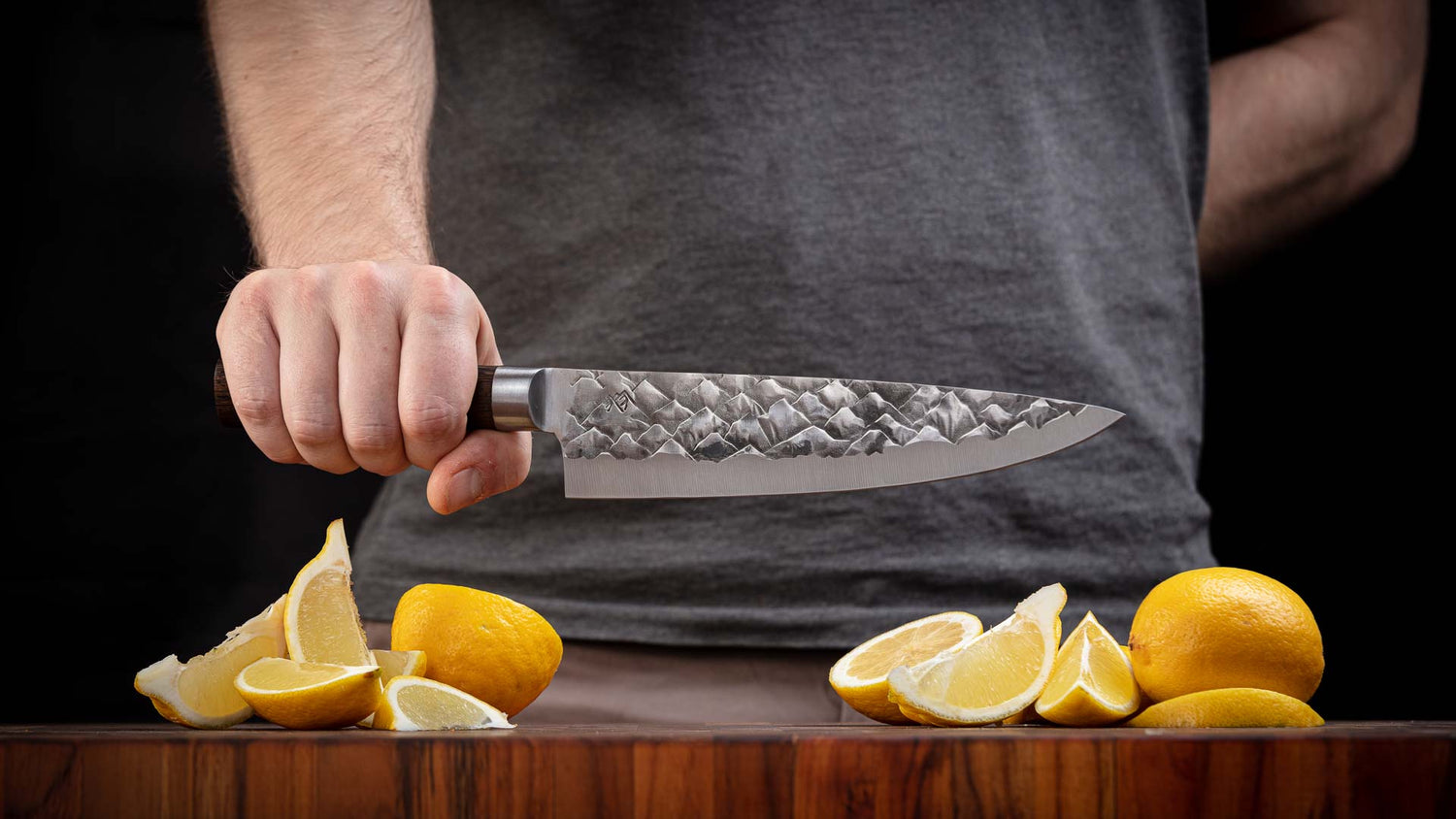
- Don't leave food on the blade. Acidic food, like lemon or tomato, can stain the steel. You can scrub a stain off, but it is easier to avoid it.
- Keep it simple. Washing-up liquid and a soft sponge or brush are all you need. Hold the knife by the handle, edge away from you, and dry it right away.

Habit 3 of 4
Storing
- Store it dry. Even stainless steel can rust if it stays wet.
- Keep the edge away from other metal. A loose knife in a drawer knocks against other tools and goes dull. A magnet strip, magnet block or knife block keeps the edge safe.
- Keep knives out of reach of children.


Habit 4 of 4
Every now and then
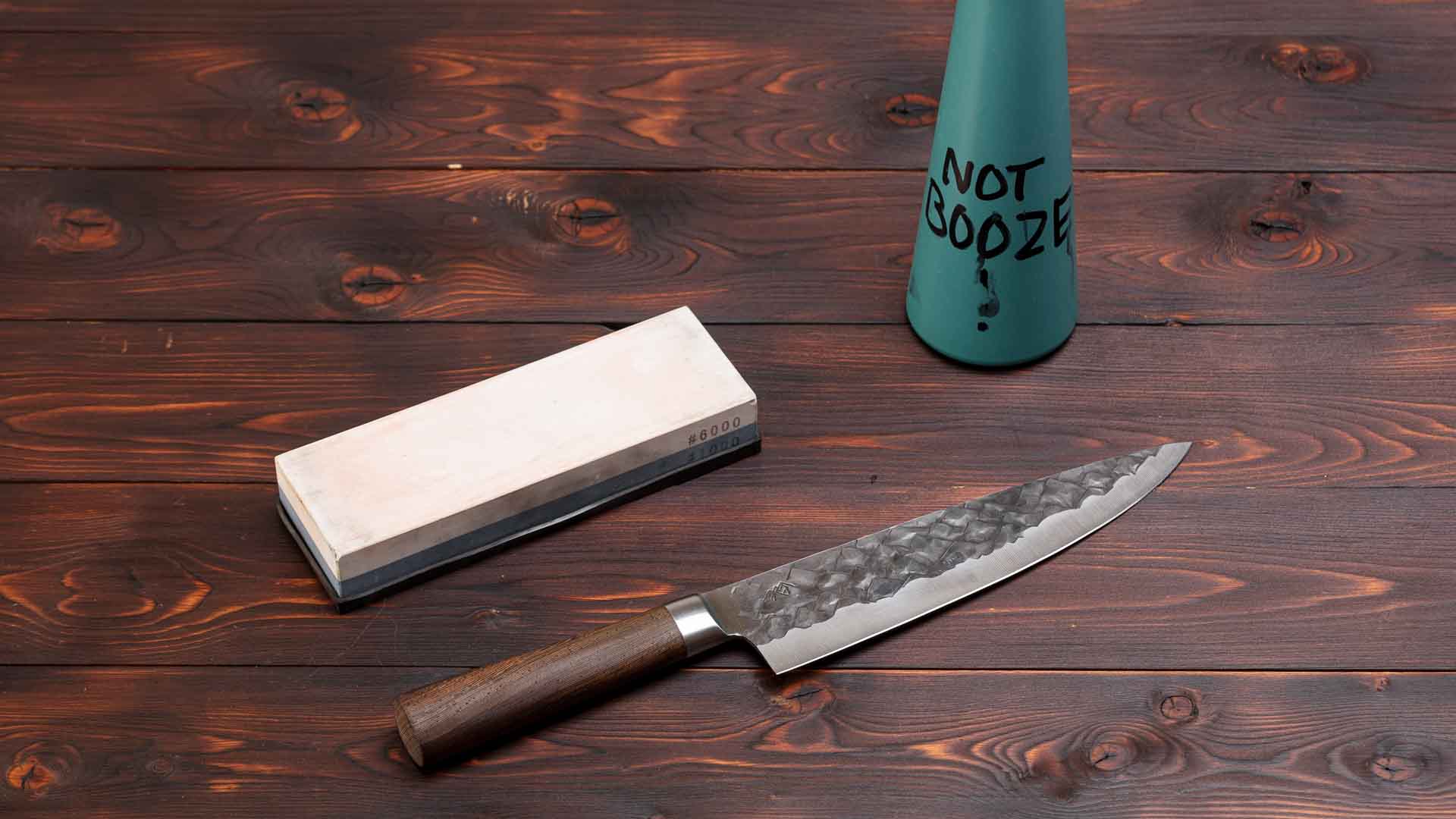
- Sharpen. Every edge goes dull with use. A few strokes on a ceramic sharpener keep it going. A whetstone brings back an edge that has gone really dull. Not keen to do it yourself? Ask a local kitchen shop. Compare the ways to sharpen a knife or follow our whetstone guide.
- Oil wooden handles. Our Original knives have a wenge hardwood handle. Oil it when it looks dull or dry: about once a month in the first year, then a few times a year. TwinSteel handles are synthetic and need no oil. Read how to oil wooden handles.
- Deal with spots early. After a lot of use you may see a stain or a speck of rust. It comes off easily if you catch it early. See how to remove and prevent rust.

Good to know: every BARE knife has a lifetime warranty on manufacturing defects. A dull edge is normal wear, and that is where these habits help.
Keep reading