



Knife steel is a lot like cooking. The ingredients matter, how you cook them matters, and every choice has a trade-off. Here is how we think about it, and why our two knife ranges use two different steels.
The ingredients
What goes into steel
A chef can tune a recipe by adding or leaving out ingredients. Steel works the same way. At its simplest, steel is iron plus carbon. More carbon lets the steel get harder.
Carbon content runs from about 0.02% in mild steel to about 1.70% in high-carbon steel. For knives, the useful range is usually 0.30% to 0.85%.
Other elements add other traits. Chromium (Cr) helps against rust. Vanadium (V) and molybdenum (Mo) help keep the grain of the steel fine, which helps it respond well to heat treatment.
The cooking
Heat treatment matters just as much
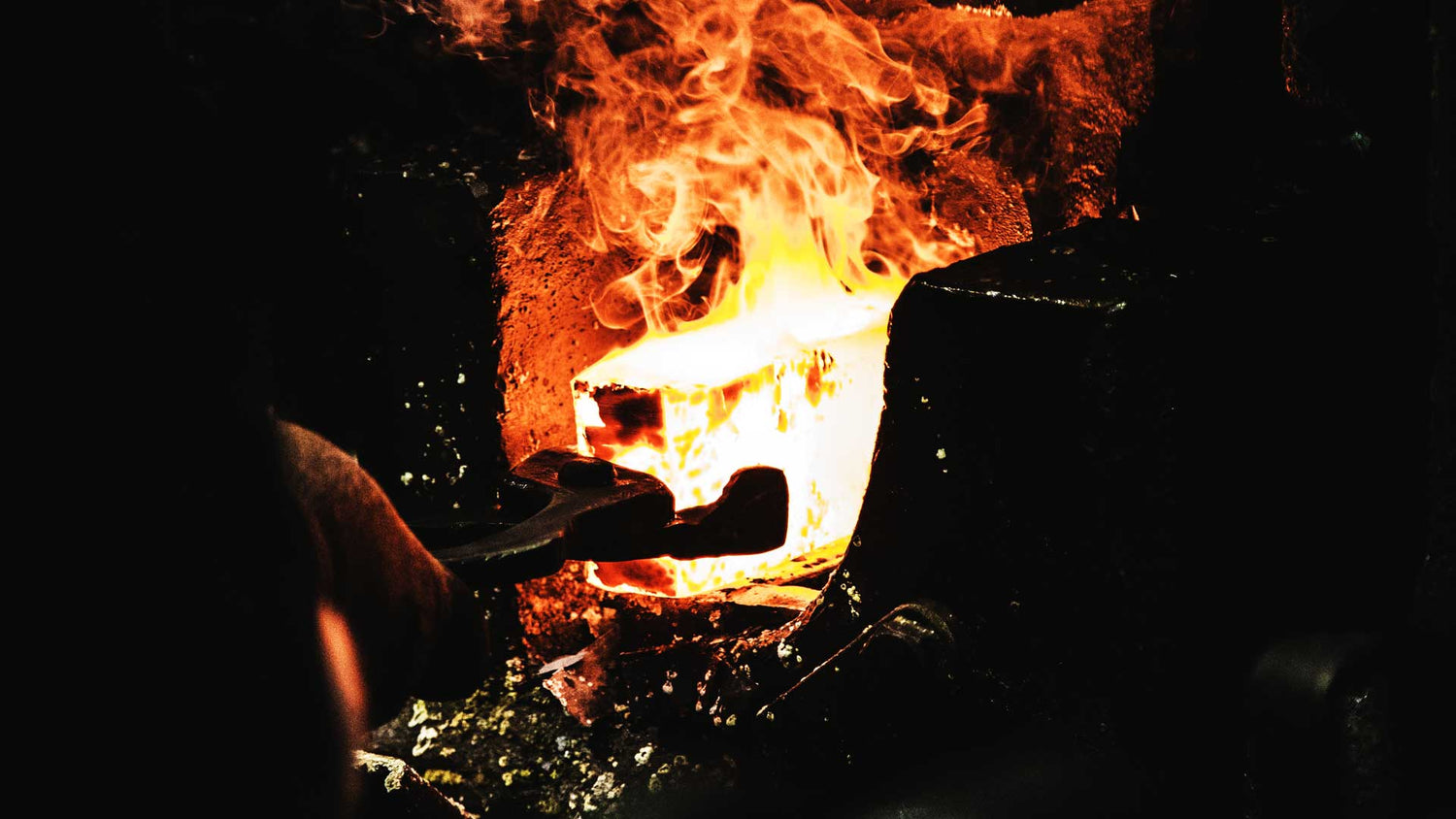
Searing a steak changes its texture and taste. Heating and cooling steel changes it too. The same set of ingredients can make very different dishes, and the same steel can end up very different depending on how it is treated.

Even a high-carbon steel can end up soft if it is not hardened (quenched) and tempered well. The alloy sets the limits. It is up to the knife maker to get a good result within them.
Known recipes
Stick to steels you can look up
Every cook knows a few basic recipes. In the same way, there are about a dozen knife steels you will see again and again. Their traits are well known and the way to treat them is standard.
You wouldn't eat something without knowing what is in it. So don't buy a knife if you don't know the steel. When you are starting out, a proven steel is a safe choice. Later you may want to try more unusual steels or handmade knives. Or you may not. A standard steel gives you steady, predictable quality.
The bill
Every steel is a trade-off
Cooking is a balancing act, and so is steel. There is no single right answer. It depends on what you want from your knife.
Harder steel keeps its edge longer, but it is often more brittle and takes more effort to sharpen. A steel that is both hard and stainless costs more to make. Before you buy a good knife, make sure you know which trade-offs come with its steel.
Our knives
Two ranges, two steels
Original: X50CrMoV15
Our Original knives use X50CrMoV15. This is a well-known German knife steel with good rust resistance. It contains:
- 0.55% carbon
- 15% chromium
- 0.8% molybdenum
- 1% manganese
- 1% silicon
- 0.04% phosphorus
- 0.015% sulphur
- 0.20% vanadium
We harden it to about 58 HRC (Rockwell C).

TwinSteel: 14C28N at the edge
On our TwinSteel knives, the cutting edge is made of 14C28N, a Swedish stainless steel. It contains nitrogen. The nitrogen lets the steel get harder while it stays stainless. We harden it to 60 HRC.
What the difference means for you
Original, about 58 HRC
A little softer. Quicker to sharpen and easy to bring back with a ceramic rod. More forgiving if you twist the blade. The trade-off: it needs a touch-up more often.
TwinSteel, 60 HRC
The harder edge stays sharp longer, so you sharpen less often. The trade-off: it takes a bit more time on the stone, and a harder edge is less forgiving if you twist it or hit bone.
Our honest take: neither one is better. If you like to touch up your knife often and want a classic wooden handle, the Original suits you. If you would rather sharpen less often, look at TwinSteel. Both are forged, sharpened at 15 degrees per side and covered by our lifetime warranty on manufacturing defects.


Keep reading