



Most frying pans live without a lid. But some dishes go a lot better with one. Here is when a lid helps, when to leave it off, and how to decide whether to add one to your Everpan.
When a lid helps
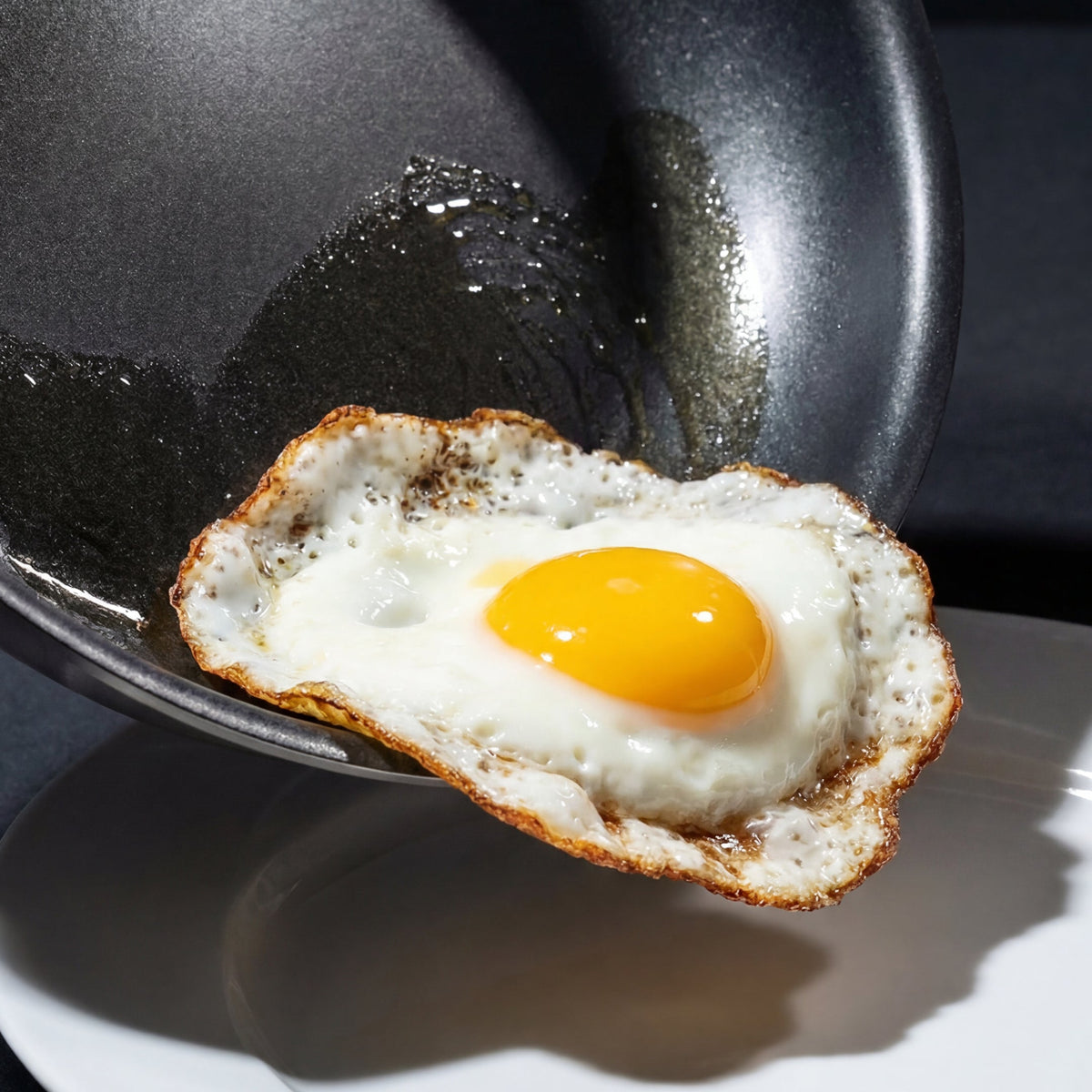
Fried eggs
Cover the pan for the last minute. The steam sets the top of the white while the yolk stays runny.
Melting cheese
Toasties, quesadillas, a burger with cheese. The cheese melts before the bottom burns.
Gyoza and dumplings
Fry the bottoms, add a splash of water, then cover so the tops steam through.
Vegetables
Green beans or broccoli with a splash of water: a few minutes covered and they are done.
Simmering and braising
Chicken thighs in sauce, a frittata, shakshuka. The lid keeps the moisture in.
Less splatter
Keeps your hob cleaner when frying. Leave a gap so steam can escape.
Leave it off for
When a lid gets in the way
A lid traps steam. That is great for cooking through, but it stops browning. Leave the lid off when you want a crust or want liquid to cook away.
- Searing steak, chicken or fish
- Crispy potatoes or roast vegetables
- Stir-frying
- Reducing a sauce
Tip: you can do both. Brown first without the lid, then cover to cook through. Or the other way round: steam with the lid, then take it off to crisp up.
Our lids
What you get
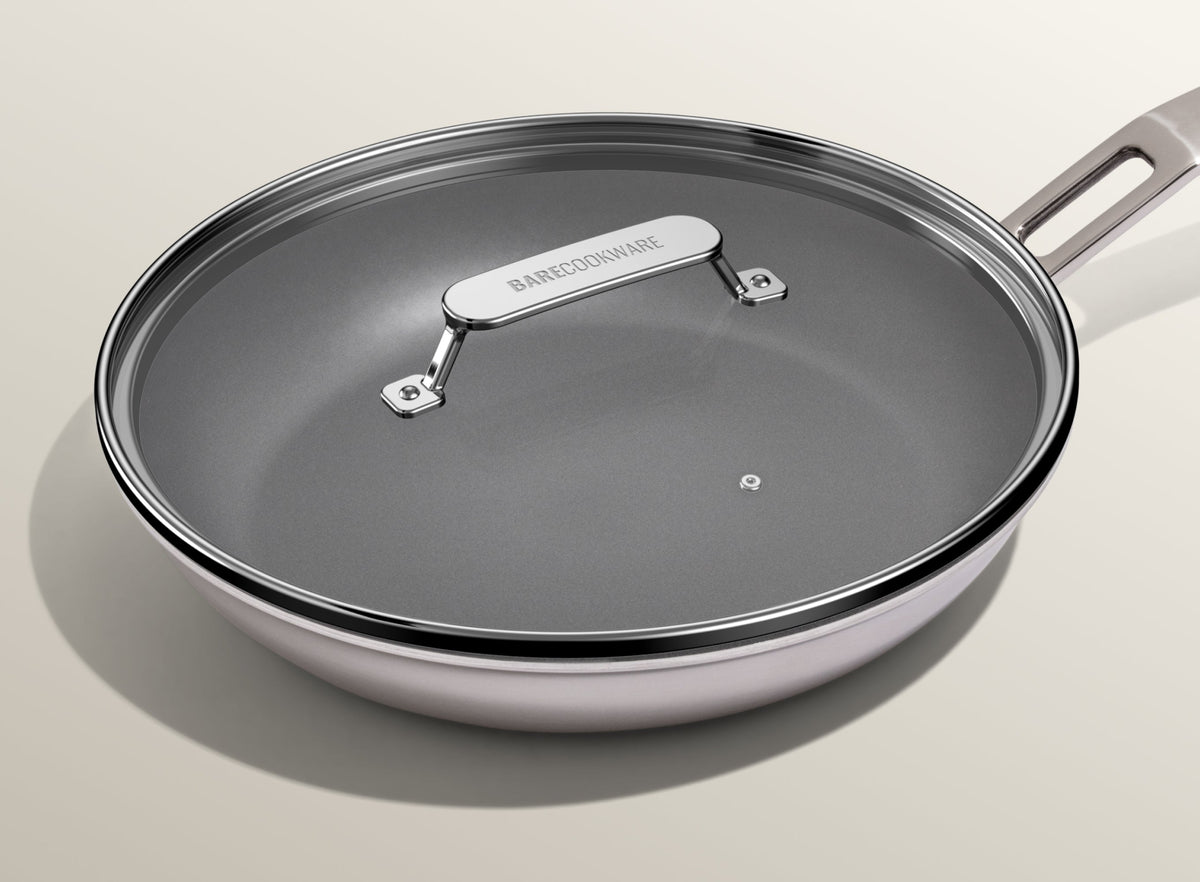
Everpan lids are glass, so you can see what is happening without lifting them. The handle is cast stainless steel and riveted on, so there are no screws to work loose. They are dishwasher safe. Each lid fits the matching Everpan size.


Our advice
Do you need one?
Take the lid if
You cook eggs, dumplings, vegetables or one-pan dishes often. Or you like a cleaner hob.
Skip it if
You mostly sear and fry, or you already have a lid that fits a 20, 24 or 28 cm pan.
Not sure? Start with a lid for the size you use most. You can add lids when you order your Everpan.
Keep reading